How to make a memory book for someone with dementia
A memory book is a simple, personal book of photos and short captions about someone's life. For a person living with dementia or memory loss, it can be a calming thing to hold, an easy way to start a conversation, and a way for caregivers to get to know them. Here's how to make one that really helps.
What a memory book is for
A memory book isn't a test of what someone remembers. It's a gentle invitation. Long-ago memories often stay clearer than recent ones, so a familiar face, a wedding photo or the house they grew up in can bring comfort and a story, even on a hard day. It also helps the people around them: a new aide who reads "I taught third grade for 31 years" knows something to talk about.
What to include
Where they come from. Parents, brothers and sisters, the town and the house they grew up in.
Love and family. Their wedding, their children as babies, family gatherings, grandchildren.
Work and pride. Their job, a uniform, a workshop, an award, something they made.
Things they love. Pets, gardens, a favorite song or hymn, a team, a recipe, a place they visited every summer.
The people in their life today. Clear, recent photos of children, grandchildren and friends, each with a name and how they're related.
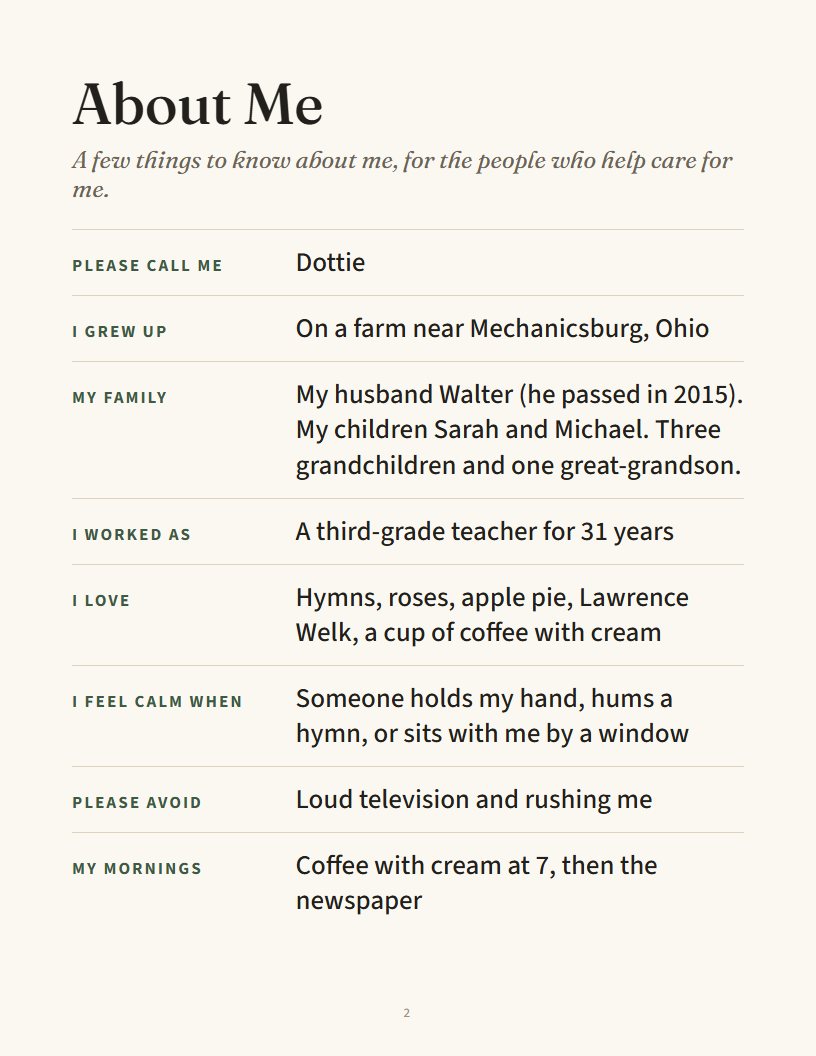
An "About Me" page. What they like to be called, what calms them, their daily routines, and what to avoid. This page is gold for caregivers and new staff.
An "About Me" page helps every caregiver know the person, not just the patient.
How to write it
One photo, one idea per page. Busy pages are hard to follow. Give each memory room.
Use large print. Big, clear type with plenty of space is easier to read for older eyes.
Write in their voice. First person feels personal and familiar: "This is me with my sister Ruth at the lake," rather than "Dorothy and Ruth, 1948."
Use the names they use. If she always called him "Pop," write "Pop."
Keep it short. A sentence or two per page is plenty. You're giving a starting point, not a full biography.
Stay positive. Leave out painful memories, losses that may feel new again, and anything that might cause worry.
A good test: read a page aloud. If it sounds like something they might say to a friend, it's right.
Choosing photos
Around twenty photos is a comfortable size, though a book can work with as few as ten. Choose clear photos where faces are easy to see. Old prints are fine: lay them flat by a window and take a photo with your phone, holding it straight above. Ask brothers, sisters and cousins for theirs too; they'll often have photos you've never seen.
How to use it during visits
Let them lead. Hand them the book and let them turn the pages at their own pace.
Ask open, easy questions. "Tell me about this house" works better than "Do you remember who this is?"
Go with whatever comes. If a story changes or drifts, that's fine. The point is connection, not accuracy.
Keep it where they can see it, and show staff it's there. Many families leave a copy with the care team.
Making it last
A book that's handled every day needs to be sturdy. A hardcover with thick pages holds up far better than a loose binder or a photo album with plastic sleeves. If several family members visit, consider a second copy for the care community.
Want it made for you?
A Lavender Post Memory Book follows every tip above: large print, one memory per page, an About Me page, and family voice recordings you can play from the page. You share photos from your phone; we write it in their words; you approve every page. $149 with free US shipping.
 Lavender Post